In a world increasingly grappling with water scarcity, the silent hum of an Atmospheric Water Generator (AWG) isn't just a sound; it's the symphony of a sustainable future. These ingenious devices, which literally pull drinking water from the air, are transforming how homes, offices, and even remote outposts access hydration. But with a growing market comes a variety of options. Understanding the distinct Types and Models of AWG Water Generators is key to making an informed choice – one that perfectly fits your specific needs and environment.
Whether you're looking to cut down on plastic bottles, secure a reliable water source for emergencies, or simply enjoy pure, clean water directly from your indoor air, the right AWG model can be a game-changer. Let’s dive deep into the models making waves and what sets them apart.
At a Glance: Your AWG Water Generator Essentials
- What they do: AWGs extract potable water from the ambient air, offering a sustainable alternative to traditional water sources.
- Core Technology: Most use refrigeration-based condensation or desiccant wheels to absorb and release water vapor.
- Key Differentiators: Capacity (liters per day), optimal humidity/temperature range, filtration systems (including UV and remineralization), dispensing options (hot/cold), portability, and energy efficiency.
- Main Types: Residential (for homes/offices), Portable (for travel/vehicles), and Industrial (large-scale applications).
- Crucial Factors: Always consider your daily water needs, local climate conditions, power availability, and desired water quality when choosing.
The Invisible Oasis: How AWG Technology Works Its Magic
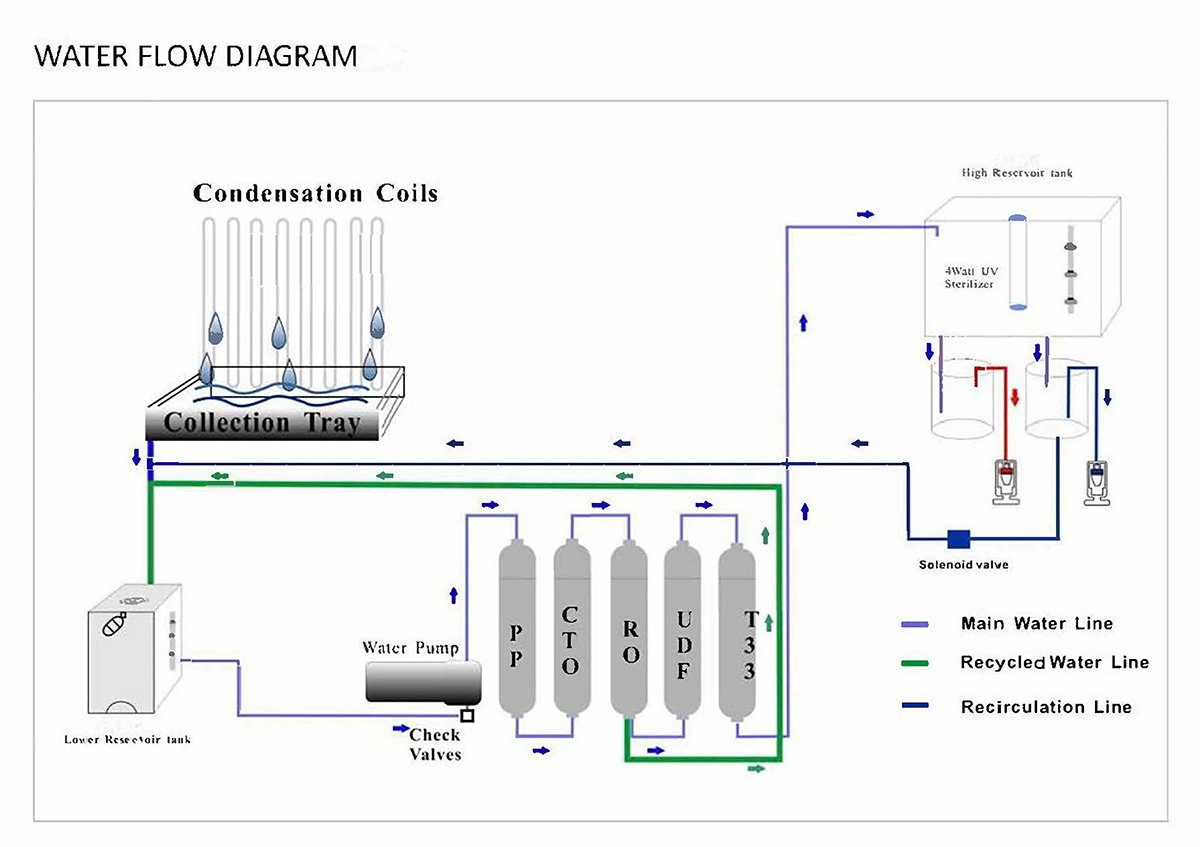
Before we explore the specific models, it’s worth a quick refresher on the science behind these modern marvels. At its heart, an AWG mimics the natural dew point process. It draws in ambient air, cools it down to its dew point, causing water vapor to condense into liquid. This collected water then undergoes a rigorous multi-stage filtration and purification process, often including UV sterilization and remineralization, to ensure it’s not just clean, but healthy and great-tasting.
This technology offers a compelling solution to global water shortages, providing a cost-effective and efficient way to access drinking water, especially in arid regions or areas with unreliable water infrastructure. If you're curious about the mechanics, you can always Learn about AWG water generators in more detail.
Distinguishing AWG Types: Sizing Up Your Options
When you start exploring AWGs, you'll quickly notice they fall into several broad categories, each designed for a particular application or scale. Understanding these types is the first step in narrowing down your search.
1. Residential & Office Workhorses: Convenience at Your Fingertips
These are the AWG units you’ll most commonly find for home or small office use. Designed for daily, personal consumption, they prioritize convenience, aesthetics, and integrated filtration systems. They typically range in capacity from 10 to 50 liters per day and are built to blend seamlessly into indoor environments.
- Key Features: Multi-stage filtration, UV sterilization, often offer hot and cold water dispensing, moderate reservoir capacities, and a focus on energy efficiency for continuous operation.
- Ideal For: Families, small businesses, individuals looking for a sustainable alternative to bottled water, or those in areas with poor tap water quality.
Several notable models shine in this category, representing some of the top AWG water generators for residential use. The NUBE SS30, for example, is lauded for its efficient residential design, comprehensive filtration, and ability to serve both warm and cold water, making it a versatile kitchen appliance. Similarly, the Solaris WaterGen A10 and A35 offer scalable solutions, providing 10 and 35 liters per day respectively, focusing on clean, mineral-enriched water without reliance on plumbing.
2. Portable & On-the-Go Solutions: Water Wherever You Roam
Imagine having a fresh water source wherever your adventures take you. That's the promise of portable AWG units. These generators are compact, lighter, and designed for mobility. While their daily output might be less than their stationary counterparts, their ability to produce water in remote locations, during travel, or in emergency situations is invaluable.
- Key Features: Compact design, often powered by 12V DC (suitable for vehicles), rugged construction, and capacities typically ranging from 5 to 25 liters per day.
- Ideal For: RV owners, campers, off-grid enthusiasts, emergency preparedness kits, small boats, or temporary worksites.
The Watergen Mobile Box stands out as an excellent example of a portable AWG units. This lightweight generator can produce up to 25 liters of fresh drinking water daily, powered by a standard 12V connection, making it perfect for cars, RVs, campervans, or even as a home backup. It's a true testament to sustainable water access on the move.
3. Industrial & Large-Scale Systems: Enterprise Hydration
While our focus here is primarily on personal and small-scale solutions, it's worth noting the existence of industrial AWGs. These massive units are engineered for high-volume water production, often generating hundreds or even thousands of liters per day. They serve communities, large commercial facilities, military operations, or agricultural needs. These systems are typically more complex, require specialized installation, and have significant power requirements.
- Key Features: High capacity, robust construction, often integrated into existing water treatment infrastructures, and advanced monitoring systems.
- Ideal For: Disaster relief efforts, remote mining camps, large construction sites, agriculture, or humanitarian aid.
4. Off-Grid & Emergency Ready Options: Self-Sufficiency Redefined
Overlapping with both residential and portable types, this category emphasizes self-sufficiency and resilience. These AWGs are chosen for their ability to operate independently of traditional infrastructure, often with lower power consumption or compatibility with alternative energy sources like solar.
- Key Features: Robustness, sometimes solar-compatible, lower humidity operation, and often larger reservoirs or the ability to gravity-feed external tanks.
- Ideal For: Homesteaders, remote cabins, emergency shelters, or anyone aiming for complete water independence.
For those planning to use an AWG generator for off-grid living, models like the NUBE SS30, with its 3.5-gallon reservoir and drain for gravity feeding external tanks, offer significant advantages. Its lower humidity requirement also makes it more versatile in varied off-grid conditions.
A Closer Look: Specific AWG Models and Their Strengths
Now, let’s get specific. Here’s a breakdown of some prominent AWG models, highlighting what makes each unique based on the latest innovations.
Spout Monolith: The High-Tech Hydrator
The Spout Monolith isn't just an AWG; it's a statement about water quality and innovation. This unit is designed to create pure, clean alkaline water directly from the air you breathe.
- Core Technology: It employs a sophisticated system that includes hospital-grade filters for air purification, a desiccant wheel to efficiently absorb water vapor, and a condenser that then releases this vapor for re-condensation. This process ensures maximum efficiency in water extraction.
- NASA-Inspired Purity: What truly sets the Spout Monolith apart is its NASA-inspired filtration technology. It doesn't just filter; it actively remineralizes the water, ensuring optimal taste and health benefits.
- Continuous Sterilization: The integrated UV-lit Spout pitcher provides continuous sterilization, guaranteeing that your water remains pristine from the moment it’s generated until it’s in your glass.
- Ideal For: Consumers who prioritize superior water quality, alkaline water benefits, cutting-edge technology, and a premium home appliance aesthetic.
Solaris WaterGen Series (A10, A20D, A35): Scalability and Smart Efficiency
The Solaris WaterGen series offers a range of AWGs designed to meet varying daily water demands, all while maintaining high standards of filtration and efficiency.
- Solaris WaterGen A10: This compact unit is ideal for individuals or small families, generating up to 10 liters of clean drinking water daily. It operates optimally at 35-80% humidity, making it suitable for many environments.
- Solaris WaterGen A20D: Stepping up in capacity, the A20D produces up to 20 liters of water per day. It’s most efficient between 31-80% humidity, though its output can decrease below 40% humidity, a crucial factor to consider for drier climates.
- Solaris WaterGen A35: For larger families or small offices, the A35 is a powerhouse, producing up to 35 liters of clean, mineral-enriched drinking water daily. Like its siblings, its output depends on ambient humidity levels, but it leverages advanced filtration and purification technology to deliver premium water without plumbing or bottled water reliance.
- Common Strengths: All Solaris models emphasize advanced filtration, purification, and the ability to produce mineral-enriched drinking water. They are designed for convenience, eliminating the need for plumbing or a constant supply of bottled water.
- Ideal For: Users needing scalable solutions, from personal use to family or small office needs, with a focus on consistent performance within optimal humidity ranges.
NUBE SS30: The Residential Comfort King
The NUBE SS30 carves out its niche by combining efficient water generation with comprehensive home convenience features.
- Efficient Residential Design: This unit is specifically tailored for residential use, providing a steady supply of fresh water.
- Comprehensive Filtration: The NUBE SS30 includes a robust filtration system, ensuring the water produced is pure and safe to drink.
- Warm and Cold Water Dispensing: A significant convenience factor, offering instant access to both warm and cold water for various uses, from making tea to refreshing drinks.
- Low Humidity Requirement: One of its standout features is its low humidity requirement for daily generation, making it a viable option in environments where other AWGs might struggle.
- Large Reservoir & External Feeding: With a 3.5-gallon reservoir and a drain for gravity feeding external tanks, the NUBE SS30 offers flexibility for continuous use or for storing water for larger needs.
- Ideal For: Homeowners who want a reliable, feature-rich AWG that offers both convenience (hot/cold water) and adaptability to varying humidity conditions, along with the option for extended storage.
Watergen Mobile Box: Adventure-Ready Water
The Watergen Mobile Box brings the power of AWG technology to your adventures, ensuring you have access to fresh drinking water no matter where you are.
- Lightweight & Portable: Designed with mobility in mind, this AWG is lightweight, making it easy to transport and set up.
- High Capacity for its Size: Despite its portability, it generates an impressive 25 liters of fresh drinking water from the air each day.
- 12V Powered: Its ability to be powered by 12V makes it incredibly versatile for use in vehicles (cars, RVs, campervans, buses) and even as a portable unit at home during power outages.
- Patented AWG Technology: It leverages Watergen’s patented AWG technology, ensuring efficient and reliable water production.
- Sustainable Alternative: The Mobile Box offers a compelling, sustainable alternative to reliance on single-use plastic bottled water during travel or in situations where potable water is scarce.
- Ideal For: Travelers, campers, RV enthusiasts, emergency responders, or anyone needing a reliable and portable source of clean drinking water in off-grid or remote locations.
Decoding Your Needs: Key Considerations When Choosing an AWG
With so many excellent models available, how do you pick the right one? Here are the critical factors to weigh:
1. Daily Capacity Needs
How much water do you and your household consume daily? A single person might be fine with an A10 (10L/day), while a family of four or a small office would lean towards an A35 (35L/day) or the Watergen Mobile Box (25L/day). Overestimate slightly to be safe.
2. Local Humidity and Temperature
This is perhaps the most crucial factor. AWGs thrive on humidity. Most operate optimally at humidity levels above 30-35% and temperatures above 15°C (59°F). If your region frequently drops below these thresholds, your unit's output will decrease significantly, or it may not produce water at all. Look for models like the NUBE SS30 which boast a lower humidity requirement if you're in a drier area. Always check the manufacturer's specified optimal range.
3. Energy Efficiency & Power Consumption
AWGs require electricity to run their fans and cooling systems. Compare the power consumption (usually measured in watts or kWh/liter) of different models. An energy-efficient unit will save you money on electricity bills over time. The Spout Monolith, for example, is designed with efficiency in mind, optimizing its desiccant wheel and condenser.
4. Filtration and Purification System
The quality of the water is paramount. Look for multi-stage filtration (sediment, activated carbon), UV sterilization for bacteria and viruses, and potentially remineralization for taste and health benefits. The Spout Monolith's NASA-inspired filtration and the Solaris series' advanced purification are great examples of comprehensive systems.
5. Reservoir Size & Dispensing Options
Consider how much water the unit can store and how you access it. Do you need instant hot and cold water like the NUBE SS30 offers? Do you want a large reservoir that can be gravity-fed to external tanks? These features add convenience and flexibility.
6. Portability vs. Stationary Use
If you need water for your RV or during camping trips, a portable AWG unit like the Watergen Mobile Box is essential. For consistent home or office use, a stationary unit offers higher capacity and more features.
7. Noise Levels
AWGs have fans and compressors, which generate some noise. If the unit will be in a living area or office, check its decibel rating. A quieter model will contribute to a more comfortable environment.
8. Maintenance Requirements
Like any appliance, AWGs need maintenance. This typically involves changing air and water filters regularly, cleaning the reservoir, and occasionally descaling. Factor in the cost and availability of replacement filters. Understanding maintaining your AWG unit is crucial for its longevity and performance.
9. Cost (Initial Investment & Running Costs)
Beyond the purchase price, consider the running costs (electricity) and the cost of replacement filters. A cheaper unit might end up being more expensive in the long run if it's inefficient or requires frequent, costly filter changes.
Common Questions About AWG Water Generators
Is AWG water safe to drink?
Absolutely. Modern AWGs incorporate advanced multi-stage filtration, often including UV sterilization and remineralization, ensuring the water produced meets or exceeds drinking water standards. Brands like Spout Monolith specifically use hospital-grade filters for purification.
How much does an AWG cost to run?
Running costs vary significantly based on the unit's energy efficiency, your local electricity rates, and ambient humidity levels. More humid environments require less energy to extract water. Generally, expect it to be comparable to running a high-efficiency dehumidifier. Some units are designed for optimal energy consumption, like those in the Solaris WaterGen series.
Do AWGs work in all climates?
No, not equally well. While some models like the NUBE SS30 boast lower humidity requirements, all AWGs perform best in environments with moderate to high humidity (typically above 30-35% RH) and comfortable temperatures. In very dry or cold climates, their efficiency and output will be significantly reduced.
Is an AWG truly sustainable?
Yes, in many ways. AWGs reduce reliance on plastic bottled water, minimizing plastic waste. They also lessen the burden on municipal water systems and don't require complex plumbing, making them an excellent choice for environmental stewardship and water independence.
Making Your Choice: A Path to Water Independence
The advancements in Atmospheric Water Generator technology have made clean, fresh drinking water from the air a tangible reality for millions. From the sophisticated Spout Monolith with its NASA-inspired filtration to the versatile Solaris series, the convenience-focused NUBE SS30, and the adventure-ready Watergen Mobile Box, there’s an AWG tailored for nearly every need.
Your journey to water independence begins with assessing your daily water consumption, understanding your local climate's humidity, and prioritizing features like filtration, portability, or hot/cold dispensing. By considering these factors carefully, you’ll not only find a model that fits your lifestyle but also invest in a sustainable, healthy future—one glass of water at a time.