Understanding Atmospheric Water Generation (AWG): Making Clean Drinking Water from Air
Imagine a world where the air you breathe isn't just delivering oxygen, but also a reliable source of clean, potable water. This isn't science fiction; it's the rapidly advancing reality of Atmospheric Water Generation (AWG). With over two billion people worldwide lacking consistent access to safe drinking water, and regions like the Caribbean grappling with the twin challenges of high humidity and hurricane-induced disruptions, the ability to pull water directly from the atmosphere is nothing short of revolutionary. AWG technology offers a sustainable, decentralized solution, transforming the very air around us into a precious, life-sustaining resource.
At a Glance: AWG Essentials
- What it is: Devices that extract moisture from humid air and convert it into clean drinking water.
- Why it matters: Addresses global water scarcity, provides sustainable access, crucial for disaster relief and off-grid living.
- How it works (main method): Draws in humid air, filters it, cools it below its dew point to condense water vapor, then purifies the collected liquid.
- Key benefit: Harnesses a continuously replenished natural resource – atmospheric moisture.
- Where it shines: Especially effective in humid climates, but desiccant-based models extend use to arid regions.
- Future outlook: Efficiency and affordability are continually improving, making AWG a vital part of future water security.
The Unseen Resource: Why Water from Air Matters
For centuries, humanity has relied on rivers, lakes, and underground aquifers. But these traditional sources are increasingly strained by population growth, pollution, and climate change. The statistics are stark: a significant portion of the global population faces acute water stress. In places like the Caribbean, where average daily humidity can hover around 80%, there's an ironic abundance of water in the air even as access to clean groundwater can be compromised by natural disasters or inadequate infrastructure.
This is where Atmospheric Water Generation steps in. AWGs tap into an overlooked, universally available resource: the invisible vapor in the air. By turning atmospheric moisture into drinkable water, these devices offer a lifeline, providing support during disruptions like hurricanes, empowering communities far from traditional water grids, and even offering homeowners a pathway to water independence.
How AWGs Work: Unpacking the Science of Condensation
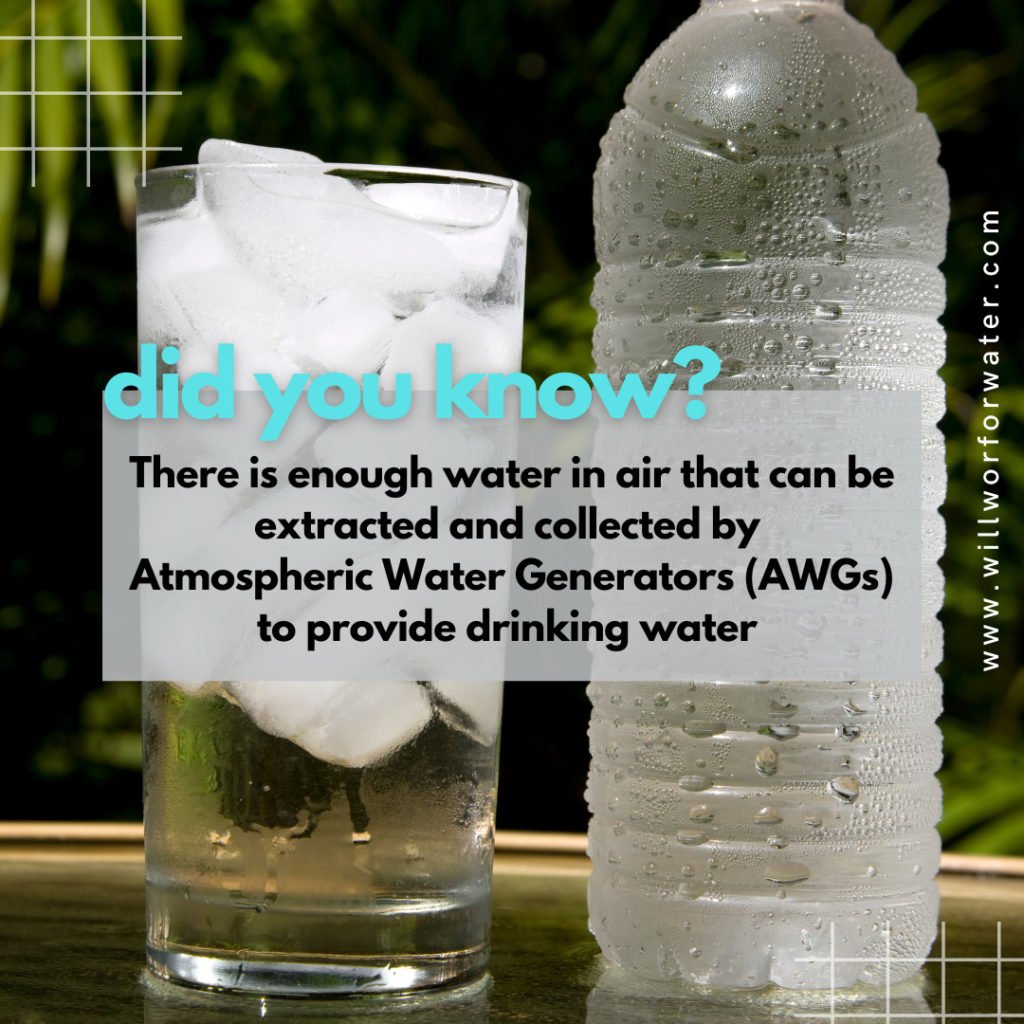
At its heart, most AWG technology relies on a simple, elegant scientific principle: condensation. It's the same process that forms dew on grass in the morning or causes your cold drink to sweat on a humid day.
Here's a step-by-step look at how a typical cooling condensation AWG operates:
- Air Intake: A fan draws humid ambient air into the AWG unit. This initial step is crucial for gathering the raw material.
- Multi-Stage Filtration: Before any cooling happens, the incoming air undergoes rigorous filtration. This isn't just about removing visible dust; it's a sophisticated process designed to strip away a wide range of airborne pollutants. Components like an Aluminum Separator tackle larger particles, a HEPA filter captures microscopic allergens and pathogens, and an Activated Modified Carbon Sieve targets chemical contaminants such as smoke, pollen, organics, viruses, benzene, and ammonia. This ensures that only clean air proceeds to the next stage.
- Cooling and Condensation: Inside the unit, the now-clean air passes over a refrigeration coil. This coil cools the air rapidly, dropping its temperature below its "dew point." Just as moisture condenses on a cold glass, the water vapor in the air condenses into liquid droplets.
- Collection: These newly formed water droplets, now clean and pure, collect and drip into a reservoir within the AWG.
- Further Purification: Even after condensation, the collected water undergoes additional purification to ensure it's absolutely safe and pleasant for consumption. This typically involves further filtration, often using carbon filters to improve taste and remove any lingering impurities, followed by UV (ultraviolet) purification to eliminate bacteria and viruses, providing a final layer of microbial protection.
This process ensures that the water you drink from an AWG is not only clean but often purer than tap water in many regions, making AWGs a reliable source for potable water. You can learn about AWG water generators and how they're engineered for performance and reliability.
Beyond the Basics: Different Flavors of AWG Technology
While condensation is the most common method, the world of Atmospheric Water Generation is surprisingly diverse, with various technologies tailored for different environmental conditions.
Cooling Condensation AWGs: The Humid Climate Champion
As described above, these are the most prevalent type. They excel in environments with high relative humidity and moderate temperatures. The Caribbean, with its average 80% daily humidity, is a prime example of where these units thrive. However, their efficiency drops significantly below 18 °C (65 °F) or 30% relative humidity, making them less suitable for colder or very dry climates.
Desiccant-Based AWGs: For the Arid Frontiers
In dry, low-humidity environments, cooling air isn't always efficient enough to yield much water. This is where desiccant-based AWGs come into their own. These systems utilize special materials called desiccants, which are highly effective at absorbing moisture directly from the air, even when humidity levels are low.
- How they work: Humid air passes over a desiccant material (such as cellulose/konjac gum, silica gel, zeolite, or concentrated brine). The desiccant "soaks up" the water vapor. Once saturated, the desiccant is then heated, causing it to release the absorbed water as vapor, which is then condensed and collected in liquid form, much like in a cooling condensation system.
- Innovation: Recent advancements include a cellulose/konjac gum-based desiccant capable of producing an impressive 13 liters per kilogram per day at just 30% humidity, and a zeolite-coated copper fin device yielding 5.8 liters per kilogram per day under similar conditions. These breakthroughs open up vast possibilities for water generation in previously challenging, arid regions.
Hybrid Systems: The Best of Both Worlds
Recognizing that humidity levels can fluctuate, some manufacturers are developing hybrid AWG systems. These units combine elements of both cooling condensation and desiccant-based technologies, allowing them to optimize water production across a wider range of humidity and temperature conditions. Some models even integrate traditional water hookups, offering flexible use cases for both atmospheric and piped water.
Other Ingenious Approaches
Beyond the dominant methods, researchers are exploring other fascinating ways to extract water from the air:
- Membrane Technology: Exposing air to specialized membranes that selectively allow only water vapor to pass through, effectively separating it from other atmospheric gases.
- Fog Collection: Inspired by natural phenomena, this method involves using large mesh nets to "catch" and collect water droplets from dense fog. This passive method is effective in specific coastal or mountainous regions.
- Pressurization: Compressing air to increase its density, which can aid in the condensation process, though this often requires significant energy input.
The Cutting Edge: Innovations and Future Horizons
The field of Atmospheric Water Generation is a hotbed of research and development, driven by the urgent need for scalable water solutions. Governments, military organizations, and private companies are investing heavily in pushing the boundaries of this technology.
- Military Applications: DARPA's Atmospheric Water Extraction program, for instance, aims to develop a device capable of providing water for 150 soldiers, with companies like GE actively developing solutions. The US Army and FEMA, recognizing the critical need for mobile and disaster-resilient water sources, contracted Terralab in 2022 for its advanced brine-based extraction technology.
- Material Science Breakthroughs: Innovations in desiccant materials, like the cellulose/konjac gum and zeolite-coated copper fin technologies mentioned earlier, are dramatically improving efficiency, particularly in lower humidity environments.
- Biomimicry: Nature itself offers incredible inspiration. Ancient civilizations like the Incas mastered passive dew and fog collection. Modern scientists are studying creatures like the Onymacris unguicularis beetle, which gathers moisture from fog using its specialized body surface. These natural models pave the way for highly efficient, often passive, water harvesting methods.
These ongoing advancements are not just academic; they are directly translating into more efficient, portable, and cost-effective AWG units that will play a crucial role in securing future water supplies.
The Case for AWG: Unlocking a World of Benefits
The advantages of Atmospheric Water Generators are multifaceted, offering solutions not just to water scarcity but also contributing to environmental sustainability and societal resilience.
Harnessing an Endless Supply
Unlike groundwater or surface water sources that can be depleted or contaminated, atmospheric moisture is a continuously replenished natural resource. The Earth's atmosphere holds an astonishing amount of water vapor—an estimated 13 trillion tons—making it a virtually inexhaustible supply. AWGs tap into this global water cycle, offering a sustainable alternative that doesn't strain existing freshwater ecosystems.
Impressive Production Capacity
Modern AWGs are remarkably efficient. A well-designed unit operating in a humid area can produce up to 8 liters of clean drinking water for every 100 liters of air processed. This translates to substantial daily output, capable of meeting the needs of families, small businesses, or even communities, depending on the scale of the system.
Sustainable Power Options
While AWGs do require energy, many contemporary models are designed for energy efficiency. Crucially, they can be integrated with renewable energy sources. Solar power, in particular, is a natural fit, allowing AWGs to operate off-grid and sustainably. Research suggests that solar thermal adsorption refrigerators can even outperform photovoltaic-powered systems for hygroscopic (desiccant-based) methods, highlighting diverse pathways to green energy for AWG operation. This reduces reliance on conventional, often carbon-intensive, electricity grids.
Environmental Guardianship
The environmental benefits of AWGs are significant:
- Reduced Groundwater Strain: By drawing water from the air, AWGs lessen the demand on often over-tapped groundwater reservoirs, helping to preserve vital ecosystems.
- Fighting Plastic Pollution: AWGs provide a direct alternative to bottled water, drastically reducing the consumption of single-use plastics. In Grenada, for example, plastic litter has a compound annual growth rate of 12%, exceeding the global upper-middle-income country average of 11%, posing a severe threat to tourism and fishing industries. Widespread AWG adoption could significantly mitigate this problem.
- Mitigating Microplastic Health Impacts: Beyond visible pollution, the reduction in plastic bottle usage also helps decrease human exposure to micro-plastics, addressing a growing public health concern.
Versatile Lifelines
The versatility of AWG technology makes it ideal for a wide range of applications:
- Disaster Relief: During hurricanes, earthquakes, or other emergencies, existing water infrastructure can be destroyed or contaminated. Portable AWGs can provide immediate access to clean water, a critical need in the initial hours and days of a crisis.
- Remote & Off-Grid Communities: For regions lacking the infrastructure for piped water, AWGs offer a decentralized solution. A rural Indian village, for instance, implemented AWGs to dramatically reduce waterborne illnesses, demonstrating their profound impact on public health.
- Water Independence for Homeowners: As concerns about municipal water quality and supply reliability grow, homeowners are increasingly seeking independence. AWGs offer a practical way to produce clean water on-demand, directly from their homes, reducing reliance on external utilities.
With their potential to provide clean drinking water to an estimated 1.5 million people annually, AWGs are not just a technology; they're a pathway to improved health, economic stability, and environmental sustainability.
Navigating the Hurdles: Challenges and Considerations
Despite their numerous advantages, Atmospheric Water Generators are not without their challenges. Understanding these limitations is key to effective implementation and ongoing technological improvement.
Humidity is Key: The Environmental Dance
The primary challenge for most AWGs, particularly cooling condensation models, is their direct dependence on ambient humidity levels. In very dry regions, the amount of water vapor in the air is simply too low for efficient extraction, limiting water production. While desiccant-based systems are designed to perform better in arid conditions, even they have efficiency thresholds. This means careful site assessment is crucial before deploying AWG technology.
The Initial Investment: A Cost Perspective
The upfront cost for AWG technology can be a significant barrier for some, ranging from $2,000 to $10,000 depending on the unit's capacity and features. This initial investment can seem substantial compared to traditional water sources. However, it's essential to consider the long-term cost savings, especially in areas where bottled water is expensive or tap water is unreliable. In Grenada, for example, a family consuming 10 liters of water per day could achieve a return on investment within seven months compared to continuously purchasing bottled water. This highlights that while the entry cost exists, the operational savings can quickly offset it.
Energy Footprint: A Matter of Source
AWGs require electricity to operate, which can be a concern in energy-scarce areas or regions reliant on carbon-intensive power grids. While modern units are increasingly energy-efficient and can be paired with solar power, the source of electricity matters. It's important to note that when powered by coal-based electricity, AWGs can have a significantly higher carbon footprint than other water sources, such as reverse osmosis desalination. Therefore, integrating AWGs with renewable energy sources isn't just an option; it's a critical strategy for maximizing their environmental benefits and ensuring truly sustainable water production.
AWG: A Pillar for a Water-Secure Future
The journey of understanding Atmospheric Water Generation reveals a technology with immense potential to address one of humanity's most pressing challenges: access to clean water. From the simple science of condensation to advanced desiccant materials and biomimicry, AWGs represent a dynamic field poised for significant growth.
As global populations grow and climate patterns shift, the need for diversified, resilient water sources will only intensify. AWGs offer a decentralized, sustainable pathway to meet this demand, reducing reliance on vulnerable traditional sources and empowering communities worldwide. While challenges like energy consumption and initial cost remain, ongoing technological advancements are steadily improving the efficiency, availability, and cost-effectiveness of AWG systems.
For individuals, businesses, and governments alike, exploring Atmospheric Water Generation isn't just about investing in a device; it's about investing in a more water-secure, resilient future. The air around us holds not just the breath of life, but also the promise of its most vital element.